Return to Wholesale Food Page
General Info
A Wisconsin law commonly referred to as the “Pickle Bill" allows you to sell certain home-canned foods without a license under certain limited circumstances.
It is important to remember that all food processors are legally liable for what they sell, regardless of licensing.
Please note that this is a narrow exception to the law; most foods sold in Wisconsin must be produced in a licensed facility.
FAQs
What products can be produced and sold without a license?
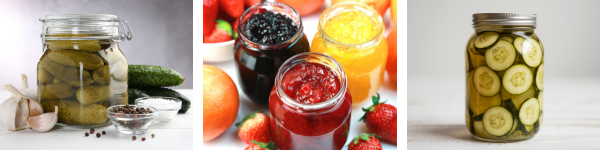
Home-canned fruits and vegetables that are naturally acidic or have been acidified by pickling or fermenting. Products must have a pH of 4.6 or lower. Examples of allowable home-canned foods include: pickled fruits and vegetables (not refrigerator pickles), salsas and chutneys, sauerkraut and kimchi, fruit based jams and jellies, cherries/peaches/applesauce and other fruits.
For acidified products it is recommended to test the pH of the finished product. Refer to Measuring pH of Foods in the Resources section on the right.
What products require a license to sell?
Processed fruits or vegetables with a pH higher than 4.6. Other processed products regardless of pH level: fish, meat, pickled eggs, lemon curd, pesto, or dressings.
What sales are permitted?
No more than $5,000 per year per person. Only retail sales (direct from producer to consumer) are allowed. Sales can only be conducted at community or social events, flea markets or farmers markets in Wisconsin.
What sales are not permitted?
The following sales are not permitted: out of your home, wholesale (to be sold later by someone else), on consignment, via the internet or out of state, exempt foods (pickle bill products) sold along with licensed foods.
What signs and labels are required?
Sign at the point of sale, stating the following “These canned goods are homemade and not subject to state inspection."
Product labels must include:
- Name and address of the person who did the canning
- Statement: “This product was made in a private home not subject to state licensing or inspection."
- All ingredients in descending order of prominence, including the common name for any ingredient that originates from milk, eggs, fish, crustacean shellfish, tree nuts, peanuts, wheat, soybeans or sesame as these are ingredients that can cause severe allergic reactions in some people, who must be able to recognize when they are present.
What records do I need to maintain?
It is suggested to maintain the following records of every batch of products made for sale as applicable:
- Recipe, including procedures and ingredients
- Amount canned and sold
- Canning date
- Sale dates and locations
- Gross sales receipts
- Results of any pH test